

The Crisis Facing Law Enforcement Leadership Today
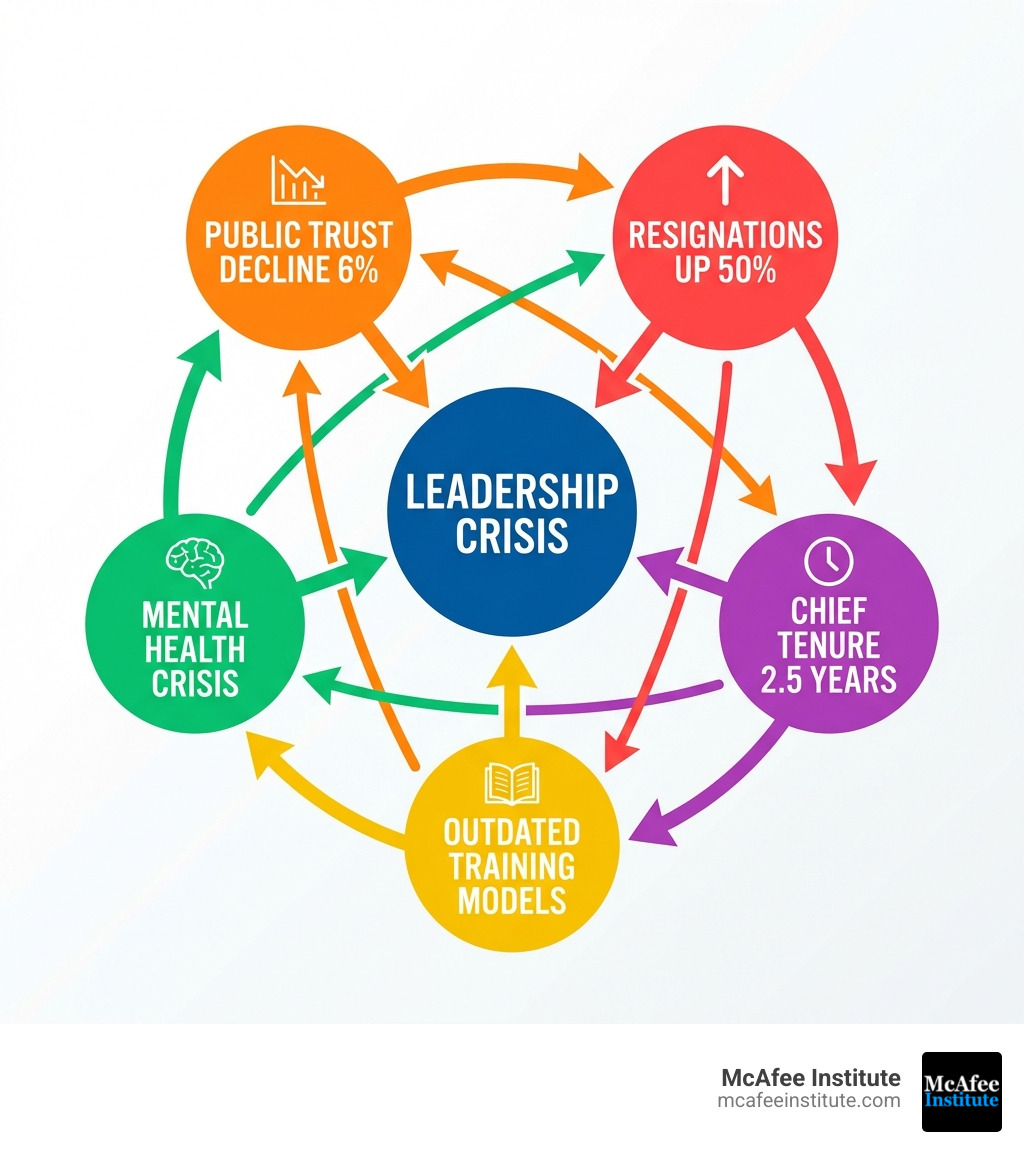
Modern leadership challenges in law enforcement represent an existential crisis for policing. Agencies nationwide face unprecedented pressures that threaten their ability to function.
The top modern leadership challenges in law enforcement include:
- Eroding Public Trust - Public faith in government has dropped 6% in the past year and continues to decline
- Talent Crisis - Resignations have increased by almost 50% since 2019, with departments unable to hire fast enough to replace outgoing officers
- Outdated Organizational Structures - Traditional hierarchical models from the Industrial Revolution are failing to meet 21st-century demands
- Generational Workforce Gaps - Baby Boomer retirements are creating leadership vacancies often filled by officers without formal management training
- Technology and Transparency - Body cameras, social media, and 24/7 scrutiny demand new leadership skills and accountability frameworks
The numbers are stark: the average police chief's tenure is just 2.5 years, and traditional criminal justice programs often neglect leadership training. Meanwhile, police suicide has been described as an epidemic, and COVID-19 was the leading cause of death in policing in 2021.
This isn't just a management problem—it's a leadership crisis that impacts every community in America.
I'm Joshua McAfee. My career in law enforcement and Fortune 100 organizations has focused on building leaders. At McAfee Institute, we understand these challenges and equip professionals with government-recognized certifications for real-world leadership. The need for adaptive, skilled leaders has never been more urgent.
Modern leadership challenges in law enforcement vocab to learn:
- AI and data-driven decision-making for public safety leaders
- building trust and accountability in investigations
The Perfect Storm: External Pressures Reshaping Police Leadership
Law enforcement agencies today operate within a complex and often volatile external environment. This intense scrutiny, combined with evolving societal expectations and tightening budgets, creates a "perfect storm" that demands a new kind of police leadership.

The primary forces driving new leadership models are multifaceted. Public trust is eroding, with faith in government down 6% in the past year. This decline complicates managing challenges like budget cuts and community expectations. Media portrayals, often showing partial interactions, shape public perception and create mistrust that leaders must steer.
The 24/7 news cycle, body cameras, and cell phones have created an era of radical transparency where every action can be broadcast globally. This increased scrutiny demands that leaders possess strong social skills and education to deal with the community, as noted in a Future Trends in Policing paper.
Beyond public perception, broader societal changes like globalization and budget concerns profoundly influence police leadership strategies. Globalization can impact local crime trends, while budget reductions force leaders to do more with less. Leaders face daily ethical, political, and relationship challenges, from managing media relations to navigating complex political landscapes.
Managing Public Perception and Building Trust
The lack of public faith is one of the most critical external pressures. When trust erodes, community collaboration becomes difficult. Police leaders must adeptly manage media relations and public perception, ensuring their departments are seen as transparent, accountable, and responsive.
This requires genuine engagement and ethical decision-making from the top. A chief's behavior heavily influences the department's ethical climate. Leaders must lead by example, aligning their philosophy and actions with ethical practices, including transparent decision-making.
Community engagement strategies are essential. Agencies build trust by giving community members a voice in public safety. This requires leaders to be accessible, listen, and provide open information, especially during crises. Admitting when the department is wrong and stating corrective actions is a crucial step in rebuilding trust.
Building trust also means being prepared for complex investigations and understanding the various facets of intelligence. Our Certified All-Source Intelligence Professional (CASIP) program provides professionals with the skills to analyze information from diverse sources, which is critical for informed decision-making and transparent communication with the public.
The Double-Edged Sword of Technology
Technology presents both opportunities and challenges for modern law enforcement leadership. It offers powerful tools for operational effectiveness but also introduces new forms of crime, demands specialized skills, and amplifies the need for accountability.
Advances in technology have fueled a rise in cybercrime, outpacing the recruitment of specialized personnel. Leaders must understand technology and accept intelligence-led policing, using data analysis to direct resources. Technologies like facial recognition, predictive policing with AI, and GPS tracking are becoming standard tools.
Social media is a double-edged sword. While it allows for real-time public information and community outreach, it also serves as a platform for instant scrutiny and misinformation. Leaders must master technological trends and ensure these powerful tools are used ethically and legally.
The rise of digital evidence and online investigations means that law enforcement leaders need to understand these specialized areas. Our Certified Cyber Intelligence Investigator (CCII) program helps professionals develop expertise in these critical fields, preparing them to lead teams that can steer the complexities of the digital world.
Police leaders need to be architects of change, continuously implementing new technology while prioritizing transparency to improve operational effectiveness and rebuild public trust.
A House Divided: The Internal Crisis of Recruitment, Retention, and Morale
While external pressures loom large, law enforcement agencies are simultaneously battling an internal crisis of recruitment, retention, and morale that threatens to hollow out their ranks. This internal struggle is deeply intertwined with generational shifts, mental health challenges, and record-low morale.
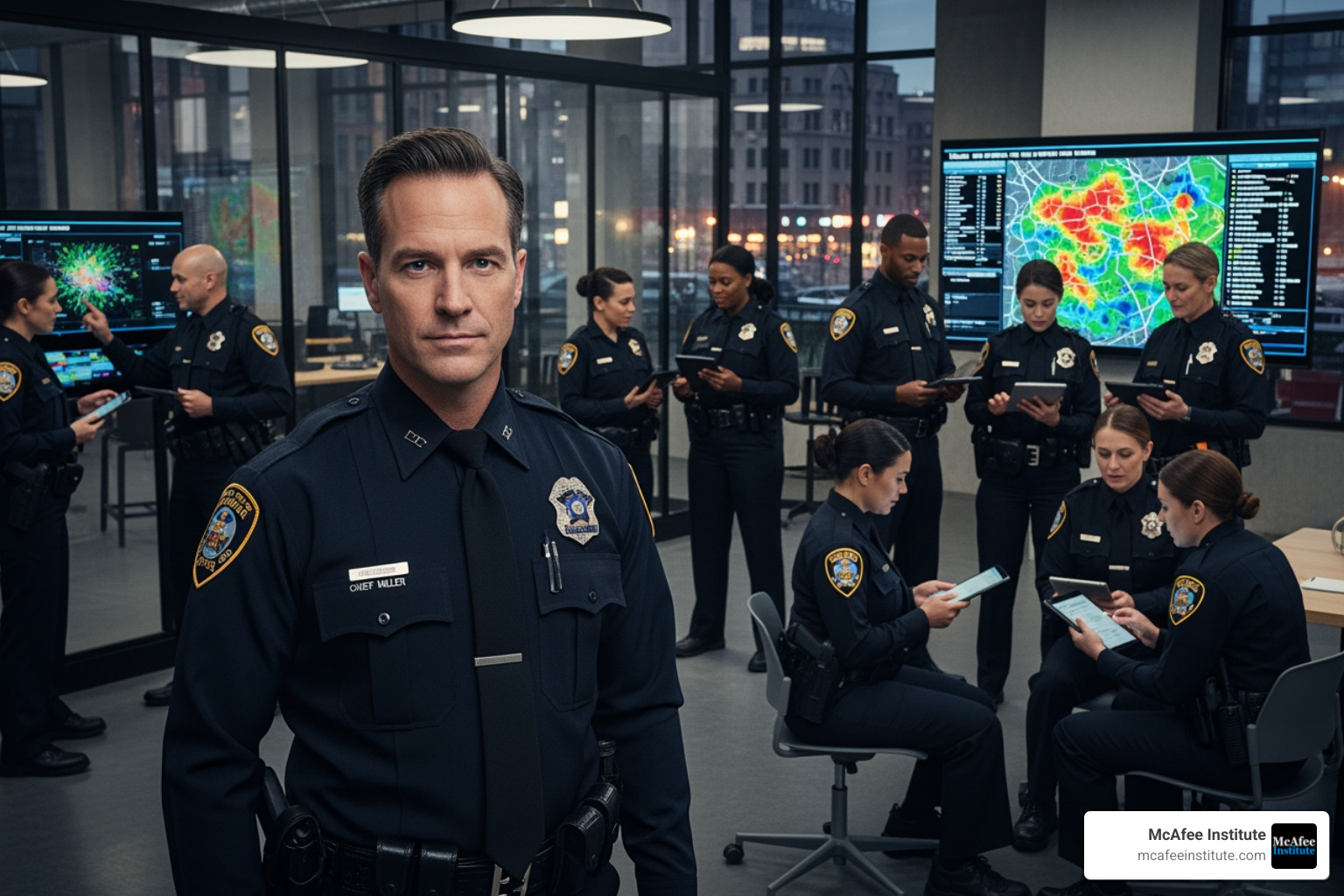
The talent shortage is acute. Fewer people are applying to join law enforcement due to negative press, political scrutiny, and increased risks. With resignations up almost 50% since 2019, departments cannot hire fast enough to replace outgoing officers. This is a significant challenge for leaders, as new candidates often have less experience and commitment.
Compounding this is a major generational shift. With the baby boomer generation entering retirement, leadership positions are opening up more frequently and are often filled by officers without formal training in management and leadership. This leadership crisis is exacerbated by a multigenerational workforce where different values and expectations can create friction.
The mental health crisis in policing is alarming, contributing to record-low morale and high attrition. Police suicide is an epidemic, and COVID-19 was the leading cause of death in 2021. Increased mental health conditions, lower engagement, and more sick days are norms for officers facing high workloads and risk. This underscores the urgent need for leaders to improve their workforce's mental health.
Bridging the Generational Gap in the Workforce
The rise of a 'new generation' of police officers—millennials and Gen Z—has profoundly impacted traditional organizational structures. These employees have distinct characteristics: they are conscientious, team-oriented, comfortable with technology, and value work-life balance, transparency, and ongoing feedback.
This new generation tends to reject rigid hierarchies and the "do as I say" command-and-control mentality. They seek autonomy and ongoing performance feedback. As noted in Police Leadership Challenges in a Changing World, they question authority and demand a greater work-life balance. This can conflict with traditional law enforcement practices and older officers who may be "married to the paramilitary and command-and-control approaches."
For police leaders, this means adapting their environments to engage and motivate these new generations. It's about bridging the gap between older and younger officers, fostering mutual understanding. The question isn't whether the new generation will change, but whether the culture needs to change to retain them. Leaders must mentor and coach contemporary employees, helping them see their place in the organization.
Addressing the Crisis in Recruitment, Retention, and Well-being
Addressing the internal crisis requires a multi-pronged approach focused on attracting qualified candidates, combating negative press, and prioritizing officer wellness.
To attract new talent, agencies must target recruitment efforts at qualified workers through advertising, signing bonuses, and web-based inducements. Some agencies are loosening rigid acceptance criteria, adopting a "whole person" approach to evaluating candidates.
Combating negative press involves proactive and transparent communication and showcasing the positive impact officers have. Leaders must be visible, engage with the public, and ensure internal personnel are informed of departmental positions before messages are delivered to the media.
The importance of officer wellness programs cannot be overstated. With police suicide an epidemic, leaders must prioritize the mental health and well-being of their workforce. This might involve exploring innovative approaches like the concept of "awe" to foster creativity and resilience.
First-line supervisors play a critical role in fostering career development and mentoring. True mentoring is an ongoing investment in individuals. Supervisors should regularly discuss career aspirations with officers, helping to create personalized development roadmaps. This fosters a supportive culture and contributes significantly to retention and morale.
For those in leadership roles, understanding and mitigating threats of violence in the workplace is also paramount to officer well-being. Our Certified Workplace Violence and Threat Specialist (WVTS) program provides crucial insights into identifying, assessing, and managing such risks.
Cracks in the Foundation: Why Traditional Command-and-Control is Failing
The organizational structure of most police departments traces back to the Industrial Revolution's paramilitary model. Its rigid hierarchy and emphasis on uniform operations over flexibility, while effective for its time, is ill-suited to the complexities of modern policing.
This rigid structure stifles innovation and demotivates a new generation of officers who view hierarchies as antiquated. The traditional focus on seniority-based promotions over merit further exacerbates this, perpetuating mediocrity when competence and adaptability are crucial.
TABLE: Traditional Paramilitary Structure vs. Modern Collaborative Model
Feature Traditional Paramilitary Structure Modern Collaborative Model
Authority Structure
Rigid, top-down hierarchy; "Do as I say" mentality
Distributed leadership; Empowerment at all levels; Shared decision-making
Decision-Making
Centralized; Limited input from lower ranks
Decentralized; Encourages input, collaboration, and innovation
Flexibility
Low; Emphasizes uniform operations and adherence to principles
High; Adaptable to changing environments and community needs
Innovation
Stifled; Resistance to change; Focus on established protocols
Encouraged; Fosters experimentation and learning from mistakes
Employee Engagement
Task-oriented; Focus on compliance
People-oriented; Values individual strengths and career growth
Promotion System
Seniority-based; Time-in-grade often key criterion
Merit-based; Focus on skills, leadership potential, and performance
Communication
Formal, one-way (directives); Often slow
Open, multi-directional; Real-time feedback and dialogue
The Urgent Need to Overcome Outdated Organizational Models
The law enforcement field is moving from one generation of leaders to the next, yet many organizations have failed to prepare adequately. Traditional organizational models are becoming irrelevant, and there's an urgent need for a new way of leading police.
Moving beyond the paramilitary model means creating structures conducive to innovation, collaboration, and inclusion. This involves rethinking police organizations to accommodate drivers of change and the needs of the contemporary employee. Lessons from the private industry, which has long grappled with generational shifts and technological integration, can provide valuable insights.
We need to invest in organizational effectiveness and leadership that understands the nuances of modern criminal investigations. Our Certified Professional Criminal Investigator (CPCI) program offers advanced training that can help leaders grasp the complexities of modern crime and adapt their organizational models accordingly.
This change requires leaders to have the courage to reconsider their current paradigms. It means moving from a focus on processes to leading people, empowering them, and fostering an environment where every member has opportunities to develop.
The Critical Gap in Leadership Training
A profound modern leadership challenge is the critical gap in leadership training. Traditional criminal justice programs and police academies focus on "reducing and solving crime with little training devoted to effective leadership." As a result, many officers are promoted into leadership positions without any formal management training.
According to The Police Chief magazine, there is a leadership crisis in law enforcement. With the baby boomer generation retiring, leadership positions are opening frequently. This means many leaders are asked to steer complex ethical, political, and relationship challenges without the necessary preparation.
The skills taught in many criminal justice degree programs are often outdated. Police leaders are expected to run efficient organizations, manage complex budgets, understand technology, and communicate effectively with diverse communities, yet their foundational training often neglects these crucial areas.
This gap underscores the need for continuous professional development. Leadership development should be an ongoing investment, starting early in an officer's career and focusing on skills-based education in management, communication, conflict resolution, and organizational leadership. Without this foundational training, we risk perpetuating a cycle where leaders are ill-equipped to address the dynamic demands of modern policing.
Navigating the New Frontier: Solutions for Modern Leadership Challenges in Law Enforcement
The challenges facing law enforcement leadership are immense, but they also present a critical opportunity for innovation. Navigating this new frontier requires adaptive leadership, strategic thinking, and a commitment to building a sustainable leadership pipeline. It's about investing in our people, even amidst limited resources.
Prioritizing personnel development with limited resources is a perpetual struggle. Agencies often focus on operational demands, making leadership development a secondary concern. However, investing in people is paramount to success. This requires a structured system that aligns career development with agency goals, not just sending staff to courses.
Nontraditional methods like officer exchange programs and short-term deployments can significantly aid leadership development. For example, shadowing a detective or temporary transfers between agencies can broaden perspectives and build expertise. The private sector has long used such rotational programs to develop well-rounded leaders.
Developing the Essential Skills for 21st-Century Police Leaders
The 21st-century police leader needs a unique blend of skills to thrive in an environment of constant change and scrutiny. Here are some of the essential skills we need to cultivate:
- Change Management: The ability to steer and lead through continuous organizational and societal changes.
- Communication: Strong oral and written communication skills for managing media relations, engaging the community, and inspiring internal teams.
- Technological Literacy: Mastering technological trends and understanding their impact on crime, operations, and constitutional law.
- Emotional Intelligence: The capacity to understand and manage one's own emotions, and to perceive and influence the emotions of others.
- Strategic Planning: The ability to think strategically, formulate long-term goals, and implement strategies that align with community needs.
- Ethical Fortitude: Unwavering commitment to ethical decision-making and ensuring transparency and accountability.
- Understanding Research and Data: The ability to leverage data for intelligence-led policing and make evidence-based decisions.
These skills move beyond traditional tactical training, focusing on the leadership capabilities needed to integrate strategy, culture, and political influences. Our Certified Executive Leader (CEL) program is designed specifically to equip aspiring and current leaders with these advanced skills, preparing them to tackle the complexities of modern law enforcement.
Building a Sustainable Leadership Pipeline
A sustainable leadership pipeline is critical for the long-term success of any police department. It involves identifying future leaders early and providing them with resources to grow. The average police chief's tenure of just 2.5 years underscores the urgency of robust succession planning.
The role of mentorship and coaching is paramount. First-line supervisors are key to fostering career development. They should engage officers in conversations about their aspirations and help define career progression.
Nontraditional methods, such as officer exchange programs or short-term deployments to specialized units, can significantly broaden an officer's experience. These methods offer invaluable learning opportunities that formal classroom training alone cannot provide.
Creating a culture of growth means fostering an environment where every member has opportunities to develop. Overcoming the challenge of prioritizing personnel development amidst limited resources requires a strategic mindset—seeing investment in people as an investment in the agency's future.
This commitment to developing leaders at all levels is reflected in our comprehensive offerings, including our Board Certifications, which provide advanced, recognized credentials for law enforcement professionals.
Addressing modern leadership challenges in law enforcement with new strategies
To effectively address modern leadership challenges in law enforcement, we must accept new strategies that leverage technology, foster learning, empower supervisors, and adopt more progressive disciplinary approaches.
Leveraging technology for organizational improvement includes using it for leadership development and collaborative learning. Fostering a learning organization means creating a climate where employees can continuously expand their capacity to learn and contribute to the organizational vision.
Empowering first-line supervisors is crucial. They are the frontline leaders, and investing in their training in mentoring, coaching, and adaptive leadership can have a cascading positive effect.
Finally, adopting strategic discipline over punitive measures is essential. Instead of relying on harsh punishment, discipline systems should focus on values, logic, and behavior modification, shifting from a "do as I say" model to leadership through instruction and persuasion.
For example, tackling complex issues like human trafficking requires not only investigative skills but also empathetic and strategic leadership. Our Certified Human Trafficking Investigator (CHTI) program exemplifies how specialized training can empower leaders to address specific modern challenges with a comprehensive and ethical approach.
Frequently Asked Questions about Law Enforcement Leadership
What is the biggest challenge for police leaders today?
The biggest challenge for police leaders today is a complex combination of rebuilding public trust in an era of intense scrutiny while simultaneously managing an internal crisis of recruitment, retention, and morale within a rapidly changing workforce. This requires balancing external demands for transparency and accountability with internal needs for support, development, and adaptability in the face of evolving threats and technologies.
How can police departments develop better leaders?
Police departments can develop better leaders by moving beyond traditional academy training to implement continuous, formal leadership development programs that focus on 21st-century skills like change management, communication, and strategic thinking. This also involves creating robust succession plans, fostering a culture of mentorship and coaching at all levels, and adopting lessons from the private sector on adaptive and collaborative leadership models. Investing in people, providing diverse learning opportunities, and empowering first-line supervisors are critical steps.
Why are younger officers leaving law enforcement?
Younger officers are leaving law enforcement due to factors like low morale, high stress, a perceived lack of support from leadership and the public, and a disconnect with rigid, hierarchical command structures that don't align with their expectations for work-life balance, collaboration, meaningful feedback, and opportunities for creativity. They often seek environments where their unique strengths are valued, and they can contribute to decision-making, rather than simply following orders.
Conclusion: Building the Next Generation of Leaders
The landscape of law enforcement is undergoing a seismic shift, presenting unprecedented modern leadership challenges in law enforcement. We've explored the external pressures of eroding public trust, increased scrutiny, and the double-edged sword of technology. We've digd into the internal crises of talent shortages, retention issues, and the critical need to bridge generational gaps and address officer well-being. And we've highlighted the cracks in the foundation of outdated command-and-control organizational models.
The imperative to adapt is not optional; it's a matter of survival for our law enforcement agencies and the communities they serve. Effective leadership is the cornerstone of effective policing—it's what will enable agencies to steer these complex waters, rebuild trust, foster a thriving workforce, and accept innovation.
Investing in leadership development is not merely an expenditure; it is an essential investment in community safety and departmental longevity. At McAfee Institute, we understand this critical need. We are committed to providing government-recognized certification programs in intelligence, investigations, and law enforcement. Our programs, designed by experts with real-world experience, equip professionals with the essential skills required to become effective 21st-century leaders. We offer lifetime access, live instructor support, and free updates for life, ensuring that our professionals are always at the forefront of their fields, ready to confront and overcome the modern leadership challenges in law enforcement head-on.